
Why Is Smoking and Vaping Not Allowed on Planes?
- daisyparker845
- Jul 6
- 3 min read
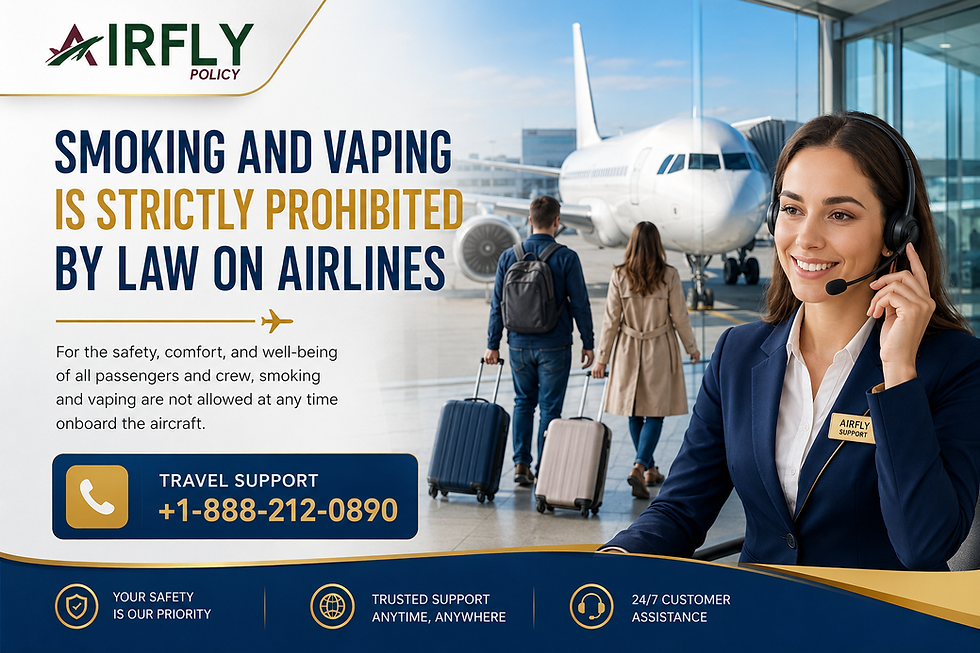
Air travel is designed to provide a safe environment for every passenger on board. One of the most important safety regulations is that smoking and vaping is strictly prohibited by law on airlines. These rules protect passengers, reduce fire hazards, and help maintain clean cabin air throughout the flight.
If you have questions about airline travel policies or need assistance before your journey, you can contact +1-888-212-0809 for more information.
Why Is Smoking and Vaping Strictly Prohibited by Law on Airlines?
Smoking and vaping is strictly prohibited by law on airlines because aircraft cabins are enclosed spaces where even a small fire can become a serious emergency. Cigarettes, e-cigarettes, and vaping devices can produce heat and smoke that may trigger onboard alarms or create safety risks. Modern aircraft are equipped with smoke detectors, particularly in lavatories, and violating these rules can result in heavy fines or legal action. These regulations ensure a healthier and safer travel experience for everyone on board.
When Did Airlines Stop Allowing Smoking?
Many travelers are curious about when was smoking banned on aeroplanes. Commercial airlines gradually introduced smoking bans during the late 1980s and 1990s as research highlighted the dangers of secondhand smoke and aviation safety concerns. Today, nearly all commercial airlines worldwide have completely banned smoking during flights, making air travel cleaner and more comfortable for passengers and crew.
Can You Carry Cigarettes While Flying?
Although smoking is prohibited during a flight, passengers often ask can you bring cigarettes on a plane. In most cases, cigarettes are permitted in both carry-on and checked baggage for personal use. However, carrying cigarettes does not grant permission to smoke or vape anywhere onboard the aircraft.
Travelers should also review customs regulations when flying internationally, as some countries limit the amount of tobacco products that can be imported.
What Happens If Someone Smokes or Vapes During a Flight?
Passengers who ignore airline regulations may face serious consequences. Cabin crew are trained to respond immediately to any smoking or vaping incidents. Depending on the situation, offenders may receive fines, be reported to aviation authorities, or even face criminal charges in some countries.
Respecting airline policies helps ensure a safe and pleasant journey for all travelers.
Are There Rules for Packing Tobacco Products?
If you're wondering can you take cigarettes on planes, the answer is generally yes, provided they are packed according to airline and airport security guidelines. Tobacco products should remain properly stored, and electronic smoking devices must follow battery safety requirements.
Always check the airline's latest baggage rules before departure to avoid unnecessary delays or restrictions.
Conclusion
Smoking and vaping restrictions exist to protect passengers, crew members, and aircraft safety. While cigarettes are generally allowed as personal belongings, using them during a flight is prohibited. Understanding these rules before traveling can help you avoid penalties and enjoy a smooth, hassle-free journey.
Frequently Asked Questions
1. Can I smoke in an airplane bathroom?
No. Smoking in aircraft lavatories is illegal and smoke detectors are installed to detect violations.
2. Is vaping treated the same as smoking on airplanes?
Yes. Most airlines prohibit vaping and the use of electronic cigarettes during flights.
3. Can I carry cigarettes in my hand luggage?
Yes. Most airlines allow cigarettes in carry-on baggage for personal use.
4. Are e-cigarettes allowed in checked baggage?
Many airlines require e-cigarettes to be carried in hand luggage because of lithium battery safety regulations.
5. What happens if someone smokes on a plane?
Passengers who smoke onboard may face fines, legal action, or other penalties depending on airline and local aviation laws.



Comments